.png)


.png)



AI-Powered Key Takeaways


Modern applications rarely fail in just one place. A login button may work, but the session token might not persist. A checkout page may render correctly, but a payment callback can still break the order flow. That is exactly where end-to-end testing matters. It validates whether the full user journey works from start to finish across the interfaces, services, and data handoffs that make up the product.
What is End-to-End (E2E) Testing?
End-to-end testing is a software testing approach that verifies a complete application workflow from beginning to end. In simple terms, it checks whether the system behaves correctly the way a real user would experience it, while also confirming that connected components and data flows work together as expected. That is what makes E2E testing broader than checking a single function, page, or service in isolation.
A good E2E test does not just ask, “Did this screen load?” It asks, “Can a user sign up, receive a confirmation, log in, complete a task, and see the right result reflected across the system?” That difference is what gives E2E testing its value.
Why End-to-End Testing is Important?
- Catches defects in complex user workflows: Users interact with complete workflows that cross multiple systems (UI, APIs, authentication, databases, third-party services, different devices/browsers). E2E testing finds defects at the "handoff points" between these systems.
- Boosts confidence in critical business paths: It ensures essential flows such as sign-up, login, search, checkout, booking, onboarding, and account recovery,which are vital for revenue, retention, and trust,are functioning correctly.
- Provides unique coverage: E2E testing complements, but does not replace, unit and integration testing by covering scenarios that lower-level tests cannot address alone.
To better understand how E2E testing differs from other testing approaches, explore our detailed guide on Integration Testing vs End-to-End Testing.
How End-to-End Testing Works (Step-by-Step Process)
A strong E2E testing process usually looks like this:
1. Identify the most important user journeys: Start with the workflows that matter most to the business and the user. Think login, account creation, product search, cart management, payment, media playback, or ticket booking.
2. Map dependencies across the workflow: List the systems involved: frontend, backend services, third-party integrations, authentication, databases, notifications, and analytics events.
3. Define the expected outcome at each stage: You need checkpoints, not just a final pass condition. That might include page states, API responses, database writes, email triggers, or status updates.
4. Set up the test environment and data: Reliable E2E testing depends on a stable test environment, predictable datasets, and controlled environment conditions.
5. Execute the workflow through the product interface or orchestration layer: This can be done manually for exploratory validation or through automation for repeatable regression coverage.
6. Validate both user-facing behavior and system behavior: The UI may look right while the data underneath is wrong. Good E2E testing checks both.
7. Review failures, isolate root causes, and refine the suite: Over time, teams prune brittle tests, strengthen selectors, improve fixtures, and keep the suite focused on high-value coverage.
Types of End-to-End Testing
There are a few practical ways teams group E2E tests:
- UI-driven E2E testing: These tests simulate what a real user does in the interface such as clicking buttons, filling forms, navigating screens, and verifying visible outcomes.
- API-assisted E2E testing: These tests still validate end-to-end workflows, but they may use APIs to set up data, speed up state transitions, or validate backend results more directly.
- Cross-browser and cross-device E2E testing: This matters when the same journey must work consistently across browsers, operating systems, and device types.
- Business-critical regression E2E testing: These are the must-pass workflows that run before release or during every important build.
- Environment-aware E2E testing: These tests validate journeys under different network, browser, or device conditions to reflect what users actually experience in the real world.
To explore how these approaches apply specifically to mobile apps, check out our guide on Mobile App Testing Types.
End-to-End Testing Example (Real-World Scenario)
Take a retail checkout flow.
An E2E test might begin when a user lands on the home page, searches for a product, opens the product detail page, adds the item to the cart, applies a coupon, enters shipping details, completes payment, and then sees the order confirmation page. Behind that visible journey, the system also needs to validate stock, calculate tax, authorize payment, create the order record, and trigger confirmation messaging. If any part of that chain breaks, the user experience fails even if one screen on its own looked fine.
The same logic applies to banking, gaming, media, healthcare, and travel apps. A successful E2E test checks the entire experience, not just isolated technical parts.
E2E Testing vs Unit Testing vs Integration Testing
These testing layers are not interchangeable. They solve different problems.
Unit tests tell you whether a small piece of logic works. Integration tests tell you whether connected pieces work together. E2E tests tell you whether the product works the way a user expects from start to finish. The strongest test strategy uses all three, with E2E focused on the journeys that matter most.
If you want a more detailed breakdown, this article on Unit Testing vs End-to-End Testing explains when to use each testing type.
Best End-to-End Testing Tools & Frameworks
1. Playwright
Playwright is a modern E2E framework built for web apps. It supports Chromium, WebKit, and Firefox, works across Windows, Linux, and macOS, and includes features such as auto-waiting, retries, tracing, isolation through browser contexts, and strong CI support. It is a strong fit for modern web teams that want reliable cross-browser coverage with rich debugging.
2. Cypress
Cypress is built for testing modern web applications in the browser. It is widely used for UI-driven E2E testing and is known for fast feedback, strong debugging, detailed error visibility, and a developer-friendly interface. It is particularly useful for frontend-heavy teams that want a tight local feedback loop.
3. Selenium
Selenium remains one of the most established browser automation ecosystems. It supports the W3C WebDriver standard and a wide range of languages and browsers, which makes it especially useful for mature enterprise automation stacks and broad browser compatibility requirements.
4. Appium
Appium is a strong choice when your E2E workflows extend into mobile applications. Its documentation describes it as an open-source automation ecosystem for UI automation across many platforms, including iOS and Android, with support for multiple programming languages and WebDriver-based automation.
No single tool is best for every team. The right choice depends on your stack, your coverage goals, your debugging needs, and whether your E2E workflows live in web, mobile, or both.
If your E2E workflows extend into mobile, explore our list of Mobile Automation Testing Tools and Frameworks to find the right tools for your needs.
End-to-End Testing in CI/CD Pipelines
E2E testing becomes far more useful when it is part of the release pipeline instead of a last-minute manual checkpoint. In CI/CD, teams usually run fast tests first, then trigger E2E suites for critical paths before promotion or deployment. That gives teams earlier failure signals and reduces the risk of shipping broken workflows. GitHub’s documentation, for example, describes CI/CD workflows that automatically build, test, and deploy code based on repository events like pull requests and merges.
In practice, that means your E2E suite should be tiered. Run a lean smoke set on every pull request, a deeper business-critical regression set on staging, and broader coverage on release candidates or scheduled runs. That balance matters because full E2E suites are valuable, but they are also the slowest and most resource-intensive layer.
Common Challenges in End-to-End Testing
The biggest E2E testing problems are rarely about writing the first test. They show up later, when the suite grows.
- Flaky tests happen when timing, async behavior, unstable environments, or brittle selectors create inconsistent failures. Playwright and Cypress both invest heavily in retries, auto-waiting, and debugging support for exactly this reason.
- High maintenance overhead becomes a problem when tests are tied too closely to UI structure rather than stable, user-meaningful contracts. That is why resilient locator strategies matter.
- Slow execution time grows as the suite expands. E2E tests cover wide workflows, so they are naturally slower than unit and integration tests. Teams need disciplined scoping and prioritization.
- Test data and environment instability can also distort results. If your accounts, APIs, dependencies, or third-party services are unpredictable, the suite will be too.
Best Practices for Effective E2E Testing
- Focus E2E coverage on core business journeys. Do not try to prove everything through this layer.
- Keep tests independent. Shared state creates hidden dependencies and harder-to-diagnose failures.
- Use stable selectors and user-visible contracts wherever possible. That reduces brittleness when the UI evolves. Playwright explicitly recommends using resilient locators and user-facing attributes.
- Control test data carefully. Stable fixtures, seeded accounts, and predictable reset logic make a massive difference.
- Treat observability as part of the test strategy. Screenshots, videos, traces, logs, network data, and performance signals help teams debug failures faster, rather than just reporting that “the test failed.”
- And finally, keep the E2E layer lean. More tests do not automatically mean better quality. Better coverage means targeting the right workflows with the right checks.
Key Metrics for Measuring E2E Testing Success
A healthy E2E program should be measured. Useful metrics include:
- Pass rate: How often critical journeys are completed successfully.
- Flake rate: How often tests fail inconsistently without a product defect.
- Execution time: How long the suite takes and whether it still fits the release cadence.
- Coverage of critical workflows: Whether the journeys that matter most to the business are actually protected.
- Defect detection value: How often E2E tests catch meaningful release-blocking issues before production.
- Failure diagnosis time: How quickly the team can move from a failed run to the root cause.
These metrics help teams improve the suite rather than just grow it.
Want to understand how performance ties into test success? This guide on Performance Testing Metrics breaks down the most important KPIs.
When Should You Use (and Avoid) E2E Testing?
Use E2E testing when:
- The workflow crosses multiple systems
- The journey is business-critical
- The risk of failure is high
- You need to release confidence in real user paths
Avoid leaning on E2E testing when:
- A unit or integration test can validate the same behavior faster
- The feature is still changing rapidly
- The scenario is too low-value to justify maintenance
- The suite is becoming bloated with redundant coverage
The best teams do not ask, “Can this be tested end to end?” They ask, “Should this be tested end-to-end?”
AI in End-to-End Testing (Future of Testing)
AI is starting to influence E2E testing in practical ways, but it is not a replacement for a sound test strategy. Current tooling shows AI being used for natural-language-driven test generation, self-healing behavior, and debugging assistance. Cypress now highlights natural-language and self-healing capabilities in its current documentation, while Microsoft’s latest Playwright ecosystem materials describe AI-assisted test creation and verification workflows.
What this really means is simple: AI can help teams move faster, reduce grunt work, and speed up diagnosis. But it still needs guardrails. Human review, stable architecture, and strong workflow design still matter.
How HeadSpin Helps Optimize End-to-End Testing
HeadSpin is useful when E2E testing needs to move beyond “Did the script pass?” and into “How did the journey actually perform on real devices, browsers, and networks?”
The HeadSpin Platform supports automation with Appium and Selenium, real device access across global locations, network simulation for web tests, built-in video and network capture, test metadata tagging, and CI/CD integration. HeadSpin also ties functional validation to deeper performance visibility by capturing more than 130 KPIs on real devices and networks. That matters because many end-to-end failures are not purely functional. They are tied to latency, rendering behavior, device state, or network conditions.
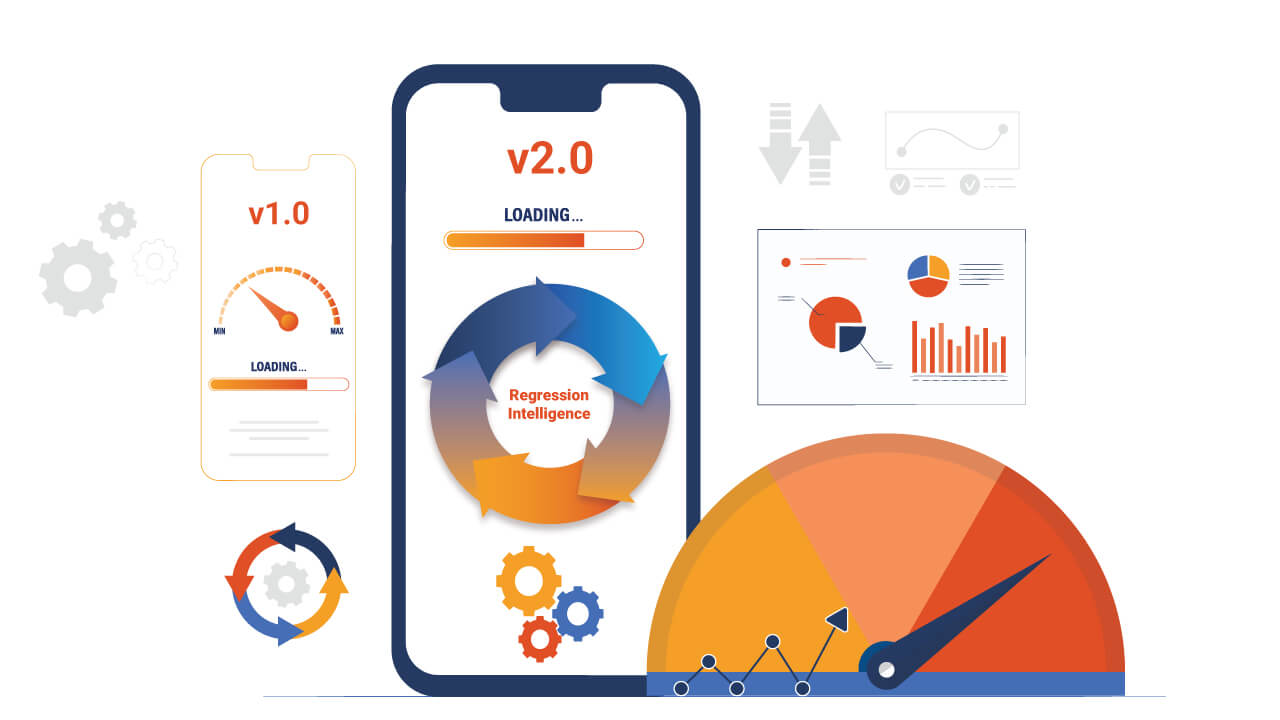
HeadSpin’s Regression Intelligence and alerting capabilities also support build-to-build KPI comparison and proactive detection of degradations. For teams running repeatable E2E coverage across releases, this adds an extra layer of confidence beyond simple pass-or-fail outcomes.
Conclusion
End-to-end testing is one of the most valuable ways to validate whether software works the way users actually experience it. It helps catch broken connections among interfaces, services, data, and environments that smaller test layers may miss. But it only pays off when it is scoped well, kept maintainable, and integrated into a broader testing strategy.
Done right, E2E testing gives teams something every release needs: real confidence in the workflows that matter most.
FAQs
Q1. Is end-to-end testing the same as functional testing?
Ans: Not exactly. E2E testing is a type of functional validation that focuses on full workflows across the system rather than on isolated features or components.
Q2. What causes flaky E2E tests?
Ans: Flakiness usually stems from unstable selectors, timing issues, asynchronous behavior, inconsistent environments, or poor test isolation. Modern tools aim to reduce this with features such as retries, auto-waiting, and more robust debugging.
Q3. Why is real device testing useful for E2E validation?
Ans: Because user journeys do not fail only in ideal lab conditions. Real devices, real browsers, and real network behavior expose issues that emulators and idealized environments can miss. At HeadSpin, this is a core part of our testing and performance monitoring approach.


Table of Contents



-1280X720-Final-2.jpg)